12 Volt Direct 28 October 2026

Want 12V power for a fridge, a Starlink Mini or lights at camp, but don’t want to wire a dual battery system into your car? You don’t have to. A portable lithium battery plus a charger that plugs into your car’s 12V socket does the job, with nothing to install.
Here’s how our 50Ah slimline portable lithium battery and our 5 amp plug & play DC to DC charger work together, how long charging really takes, and how to get the most out of them on a trip.
50Ah
12.8V LiFePO4
7.3 kg
Battery weight
5A
Charge from the car
0
Wires to install
A fixed dual battery system is great if you’re on the road every weekend, but it means a battery tray, cable runs, fuses and usually an installer. If you camp a few times a year, drive a work ute during the week or swap between cars, that’s a lot of cost for something you use now and then.
With a portable setup, the battery lives in the car when you need it and in the garage when you don’t. The charger plugs into the 12V socket you already have, so there’s no drilling, no wiring and nothing for an auto electrician to do. Move it to the next car, the boat or the caravan and it works the same way.
A 20A or 40A DC to DC charger charges faster, but it has to be wired in. That means running heavy cable, usually 8 B&S, from the start battery under the bonnet through to the back of the car, with fuses at each end. It’s a proper install job.
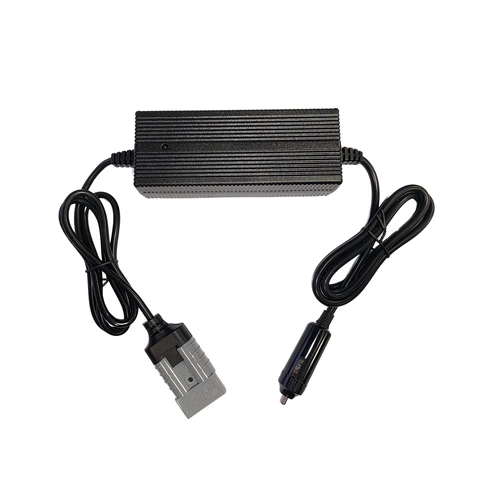
Our 5A charger draws so little that a standard 12V power point can run it. If your car already has a socket in the centre console or in the cargo area, plug it in and you’re done. No new cable from the start battery, nothing under the bonnet.
We chose 5 amps on purpose. We tested a 10A plug-in DC to DC charger too. In our testing, 10 amps is about the absolute maximum a car’s cigarette lighter socket is rated for, and the factory wiring behind it is usually quite thin.
Anything much above our 5A charger was unreliable unless you added extra wiring beyond the factory spec, and that defeats the point of plug and play. At 5A the charger sits comfortably inside what the socket and its wiring were built for, so there’s no risk of popping fuses or damaging wiring.

The battery
At 330 x 210 x 70 mm and 7.3 kg, it slides behind a seat or beside the fridge and carries by the handle. Everything you need is built into the front panel.

The charger
One end plugs into your car’s 12V cigarette socket, the other into the battery’s Anderson socket. That’s the whole install.
A lithium battery needs 14.6V to charge fully, which is more than a car socket gives you, especially with a modern smart alternator. The charger lifts the voltage to 14.6V with a proper LiFePO4 charge profile, so the battery actually charges instead of just sitting connected.
This is the question we get asked most. At 5 amps, a completely flat 50Ah battery takes roughly 10 to 12 hours of driving to fill. That sounds like a lot, and it would be if you relied on the car to do all the charging.
That’s not how this setup is meant to work. The DC to DC charger is a top-up charger. Start the trip with the battery full, and the charger puts power back in every time you drive, so you’re never starting from empty.
Rule of thumb: every hour of driving puts back about 5Ah, or around 10% of the battery.
| Time driving | Charge put back (approx.) | Share of the 50Ah battery |
|---|---|---|
| 1 hour | about 5Ah | about 10% |
| 2 hours | about 10Ah | about 20% |
| 4 hours | about 20Ah | about 40% |
| 10 hours or more | about 50Ah | flat to full |
Figures are a guide only. If you’re running the fridge off the battery while you drive, some of that charge goes straight to the fridge.
Charge it fully at home before you leave
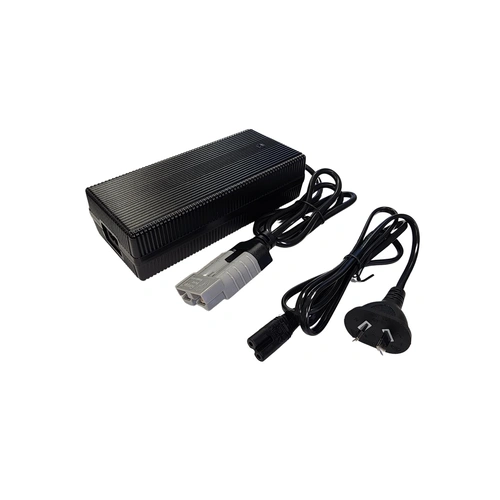
Use a mains lithium charger the night before. Our 10A LiFePO4 charger fills the battery from flat in around 5 to 6 hours, or the 5A version overnight. Both plug straight into the Anderson socket.
Plug in the DC to DC charger whenever you drive
Battery in the car, charger in the 12V socket, Anderson into the battery. Every leg of the trip tops it back up.
Run your gear at camp
Plug the fridge, Starlink or lights into the battery’s 12V sockets, USB or Anderson outputs.
Put a solar panel out at camp
While the car is off, set up a portable solar panel or blanket and plug it into the battery’s Anderson socket through a solar regulator. It charges the battery back up during the day while the fridge keeps running.
Drive to the next spot and repeat
Between a full start, a top-up on every drive and solar at camp, the battery stays charged for a weekend away instead of running down.
Tried in our own truck
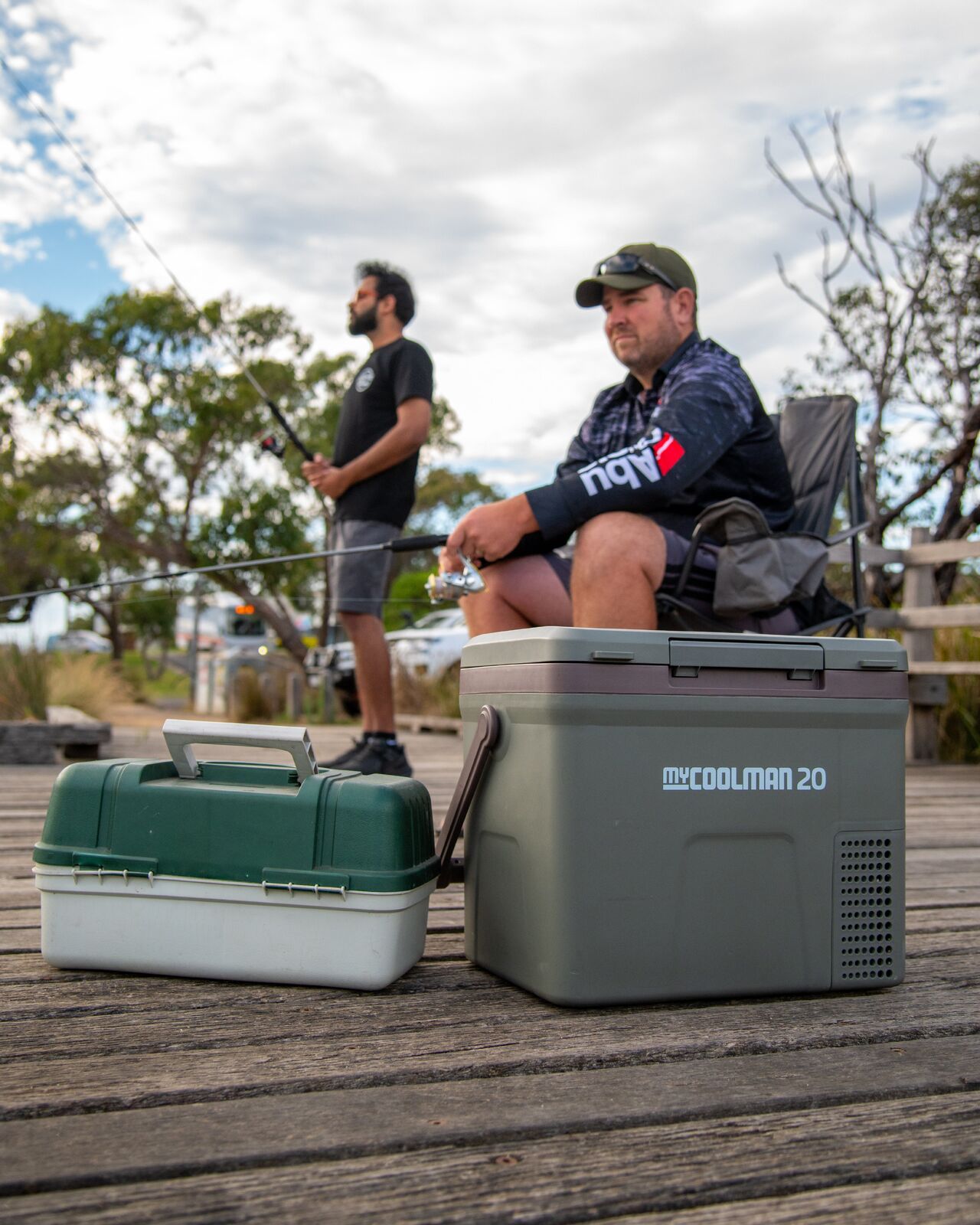
We run this exact setup in our own truck: the 50Ah battery, the 5A plug & play charger and the myCOOLMAN 20 litre compressor fridge. The charger tops the battery up while we drive, and when the car is turned off the fridge keeps running off the battery. No extra cabling to the fridge.
The myCOOLMAN 20 is rated at just 0.8Ah per hour (tested at 12V, set to 5°C in 32°C heat), so it suits a 50Ah battery well. In our experience, starting with a full battery and driving long distances each day, the battery runs this fridge for 2 to 3 days.
That depends on what you plug in, how hot it is and how much you drive. As a rough guide:
Running a fridge and a Starlink together for days without driving? That’s when it’s worth adding solar or stepping up to a bigger battery. Ask us and we’ll help you size it.
See more in DC to DC chargers and slimline lithium batteries.
Tell us what you want to run and how you travel, and we’ll help you work out if this setup suits. Send us a message.
Designed by 12 Volt Direct
Portable power that charges as you drive. Nothing to install.